


Heated Socks Manufacturer: Complete B2B Buying Guide

Choosing the right heated socks manufacturer is important for brands, wholesalers, importers and distributors entering the heated wearable market.
Heated socks combine technical fabrics, heating elements, rechargeable batteries and wearable design. For B2B buyers, the right supplier needs to provide more than a competitive price. Heating performance, battery configuration, comfort, durability, customization and quality control all affect the final product.
This guide explains the key factors to consider when sourcing heated socks for wholesale, OEM and private label projects.
Quick Guide for B2B Buyers
- Define the target market and application first.
- Check heating area and heating performance.
- Compare battery capacity, voltage and runtime.
- Evaluate fabric, fit and moisture management.
- Ask about OEM/ODM customization.
- Confirm testing, quality control and applicable market requirements.
What Is a Heated Socks Manufacturer?
A heated socks manufacturer develops and produces socks with an integrated electrical heating system. Depending on the product design, the heating system may include rechargeable batteries, heating elements, wiring, controllers and protective components.
A manufacturer serving B2B customers may also provide product development, sample making, logo customization, packaging and bulk production.
For brands and distributors, working directly with an experienced manufacturer can make it easier to develop a heated sock around a specific market, application and price range.
How Do Heated Socks Work?
The basic working principle is simple:
Rechargeable Battery → Power Control → Heating Element → Targeted Warmth
When the user activates the heating system, electrical energy from the rechargeable battery powers the heating element. The heating element converts electrical energy into heat around selected areas of the sock.
Heating coverage varies by product design. Common configurations may focus on the toes, forefoot, instep or other areas of the foot.
For B2B projects, the heating layout should be selected according to the intended application, sock construction, battery capacity and target user.
What Should You Check When Choosing a Heated Socks Manufacturer?
1. Heating System
The heating element is one of the most important parts of a heated sock. Buyers should ask where the heating element is positioned, how the heating zones are designed and how the heating system performs at different settings.
Different products may use different heating technologies and heating layouts. Instead of choosing a supplier based only on the advertised temperature, request actual product specifications and sample testing.
2. Battery and Runtime
Battery performance directly affects the user experience. Important specifications include battery voltage, capacity, size, weight, charging method and expected operating time.
Runtime can vary depending on the heating level, power consumption, battery capacity, ambient temperature and product design.
For wholesale buyers, it is better to ask for runtime information at different heating levels instead of relying on a single maximum runtime claim.
3. Fabric and Comfort
A heated sock still needs to function as a comfortable technical sock when the heating system is not being used.
Depending on the target application, manufacturers may use combinations of polyester, cotton, nylon, spandex or other functional textile materials.
Buyers should evaluate stretch, moisture management, thickness, warmth, fit and compatibility with the footwear used by the target customer.
4. Battery Pocket and Product Construction
The battery needs to be positioned in a way that does not unnecessarily affect comfort or movement.
The battery pocket, cable routing and electrical connections should be considered during product development. For different applications such as skiing, hunting, outdoor work or motorcycle riding, the preferred construction may be different.
5. Quality Control
Heated socks contain both textile and electrical components, so quality control should cover both areas.
Depending on the project, manufacturers may check:
- Heating element function
- Electrical connections
- Battery and charging function
- Heating level operation
- Stitching and fabric quality
- Battery pocket construction
- Overall product appearance
Heated Socks Buying Checklist for B2B Buyers
| What to Check | Why It Matters |
|---|---|
| Heating Area | Determines where warmth is concentrated. |
| Battery | Affects runtime, weight and product configuration. |
| Heating Levels | Allows users to adjust heating output for different conditions. |
| Fabric | Affects comfort, fit, breathability and durability. |
| Battery Pocket | Important for comfort and movement. |
| Testing | Helps verify heating and product consistency. |
| OEM Options | Determines how much the product can be customized for your brand. |
OEM and Private Label Heated Socks
For brands launching their own heated socks, OEM and ODM manufacturing can provide more flexibility than buying a standard product.
Depending on the project, customization may include:
- Heating zone design
- Battery configuration
- Sock materials
- Colors and patterns
- Logo and branding
- Size options
- Packaging
- User manuals and labels
Before production, brands should provide the manufacturer with their target market, application, expected quantity, preferred specifications and packaging requirements.
What Should You Ask a Heated Socks Manufacturer?
Before requesting a quotation, B2B buyers should ask:
- What heating technology and heating area are available?
- What battery options can be used?
- What is the expected runtime at different heating levels?
- What materials and sizes are available?
- Can the heating system be customized?
- Can the logo and packaging be customized?
- What is the MOQ for OEM production?
- What is the sample development lead time?
- What quality-control tests are performed?
- What product and battery documentation is available for the target market?
Heated Socks for Different B2B Applications
Heated socks can be developed for different market segments, including:
- Winter sports: skiing and snowboarding
- Outdoor recreation: hunting, hiking and fishing
- Workwear: outdoor and cold-weather applications
- Motorcycle: cold-weather riding
- Retail brands: private label winter accessories
The target application should be defined before selecting the heating system, materials and battery configuration.
Why Choose ACEWARM for OEM Heated Socks?
ACEWARM provides OEM/ODM solutions for brands, wholesalers and distributors developing heated wearable products.
Depending on project requirements, heated socks can be developed around different heating zones, battery configurations, textile materials, sizes, branding and packaging requirements.
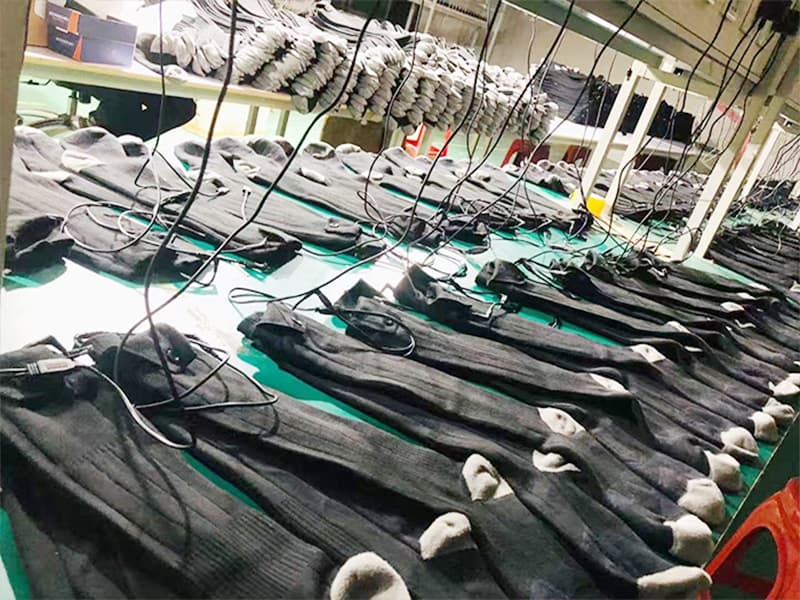
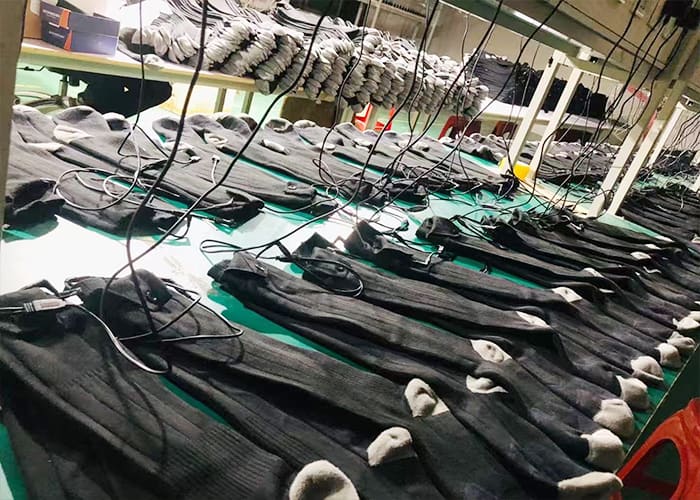
Our team can support the process from product concept and sample development to bulk production and quality inspection.
Looking for a Heated Socks Manufacturer?
OEM/ODM Heated Socks for Your Brand
Contact ACEWARM for OEM/ODM heated socks, samples, customization options and bulk pricing.
Conclusion
Choosing a reliable heated socks manufacturer requires more than comparing unit prices. Heating performance, battery configuration, fabric, comfort, product construction, testing and OEM capabilities all need to be considered together.
For brands and distributors, working with a manufacturer that can support product development and customization can make it easier to build a heated socks product suited to a specific market.
FAQ About Heated Socks
How do heated socks work?
Heated socks use a rechargeable battery to power heating elements integrated into the sock. The heating elements convert electrical energy into heat around selected areas of the foot.
How long do heated socks last on one charge?
Runtime depends on battery capacity, heating level, power consumption, ambient temperature and product design. Buyers should request actual runtime information for each heating setting.
Can heated socks be customized?
Yes. OEM/ODM projects can include customization of heating zones, battery configuration, materials, sizes, colors, logos, packaging and other product specifications.
What is important when buying heated socks wholesale?
Buyers should evaluate heating performance, battery specifications, comfort, materials, quality control, customization options, MOQ, sample development and applicable market requirements.